
The research behind The Hidden Aftermath
- Jul 25, 2025
- 2 min read
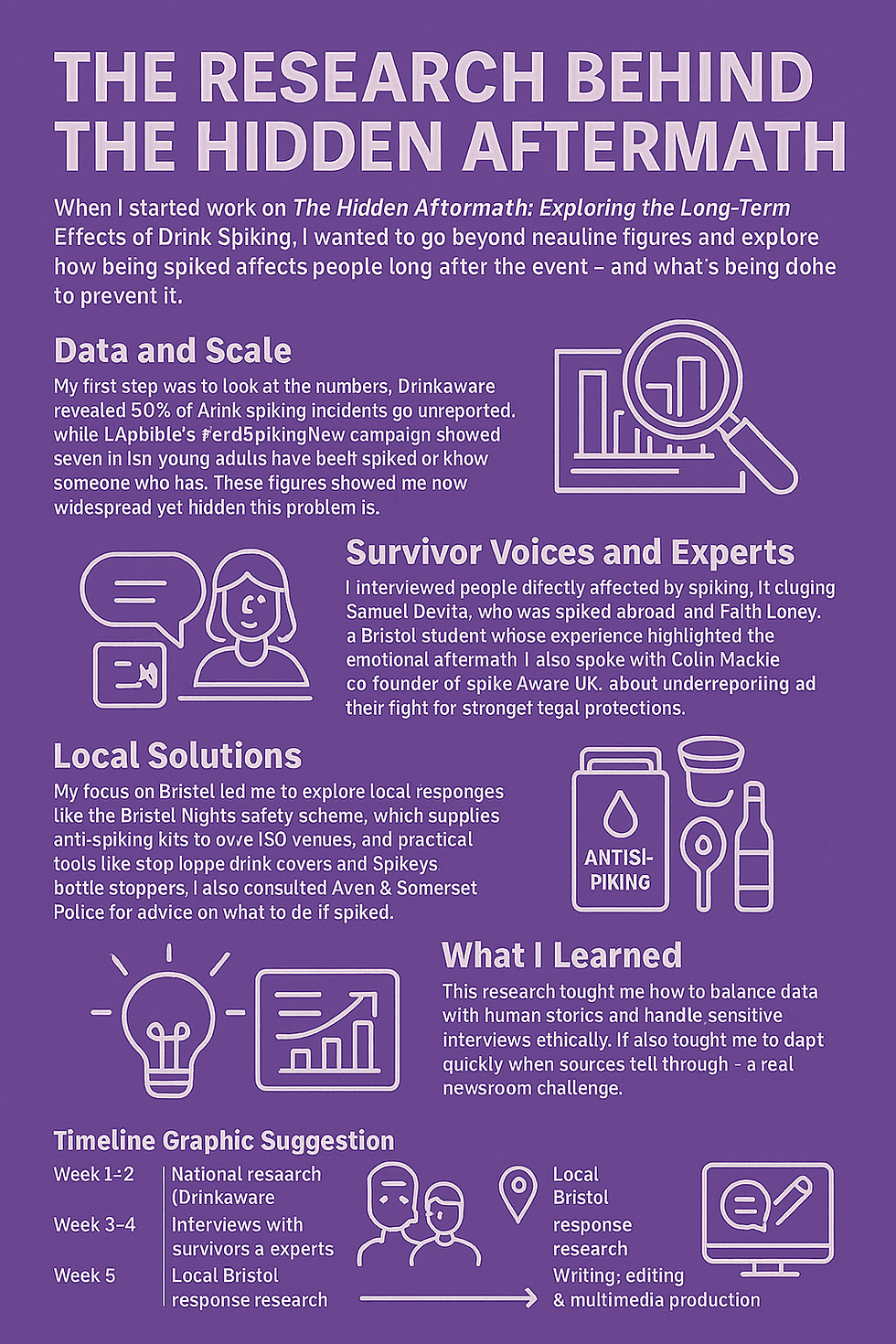
When I started work on The Hidden Aftermath: Exploring the Long-Term Effects of Drink Spiking, I wanted to go beyond headline figures and explore how being spiked affects people long after the event – and what’s being done to prevent it.
Data and Scale
My first step was to look at the numbers. Drinkaware revealed 90% of drink spiking incidents go unreported, while LADbible’s #EndSpikingNow campaign showed seven in ten young adults have been spiked or know someone who has. These figures showed me how widespread yet hidden this problem is.
Survivor Voices and Experts
I interviewed people directly affected by spiking, including Samuel Devita, who was spiked abroad and Faith Loney, who lives in Bristol, her experience highlighted the emotional aftermath. I also spoke with Colin Mackie, chair and co-founder of Spike Aware UK, about underreporting and their fight for stronger legal protections.
Local Solutions
My focus on Bristol led me to explore local responses like the Bristol Nights safety scheme, which supplies anti-spiking kits to over 150 venues, and practical tools like StopTopps drink covers and Spikeys bottle stoppers. I also researched into Avon & Somerset Police to find out the advice they give on what to do if you have been or know someone who has been spiked.
What I Learned
This research taught me how to balance data with human stories and handle sensitive interviews ethically. It also taught me to adapt quickly when sources fell through – a real newsroom challenge.
Timeline Graphic Suggestion
Timeline Steps:
Week 1–2: National research (Drinkaware, LADbible)
Week 3–4: Interviews with survivors & experts
Week 5: Local Bristol response research
Week 6: Writing, editing & multimedia production


Comments