
Why this project?
- Jul 25, 2025
- 2 min read

Last summer, I was spiked at a music festival in Croatia — and I didn’t even realise it at the time.
The night started like so many others: music, laughter, friends, that rush of excitement you only get at a live event. But somewhere along the way, everything changed. My memory cuts out halfway through the evening. I remember dancing near the main stage, but after that? Nothing. I couldn’t tell you how I got back to my apartment, or even how I got to bed.
I woke up the next morning completely disoriented. I felt scared, confused and shaken. What scared me most wasn’t just that the night had vanished — it was the realisation that something had happened to me without my knowledge or control. That sense of vulnerability didn’t go away.
Since then, nights out haven’t felt the same. I double-check every drink. I feel anxious in crowds. I don’t relax the way I used to. And that’s when I realised something: we hear a lot about drink spiking in headlines or viral TikToks, but we rarely talk about what happens next.
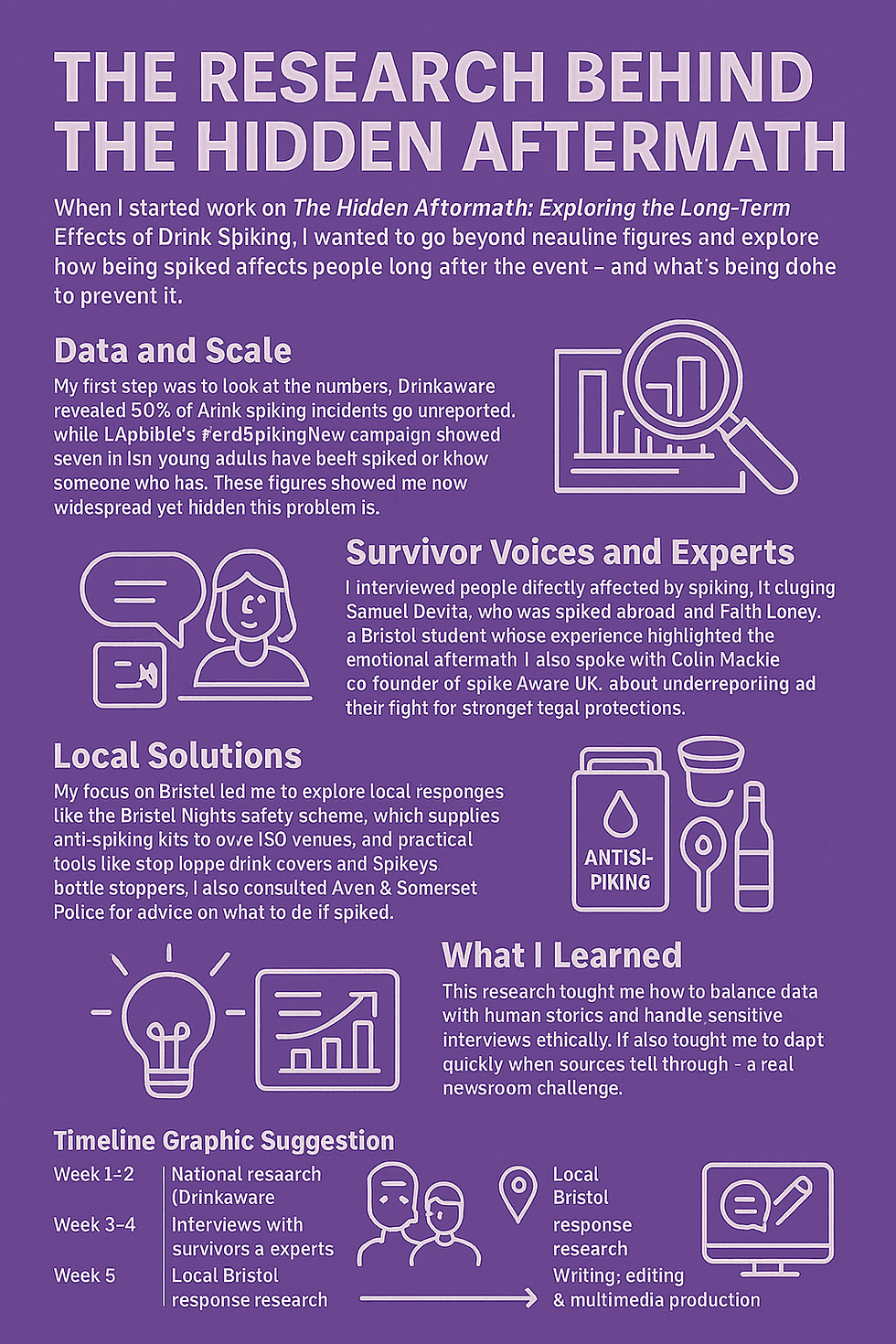
That’s what inspired me to write The Hidden Aftermath — a feature exploring the long-term effects of drink spiking. I wanted to look beyond the incident itself and focus on the emotional, psychological and social toll it can take on people — because that’s the part that often gets overlooked.
This project also gave me the chance to speak with other victims who’ve bravely shared their experiences and experts who are working hard to bring about change. And if there’s one thing that came through loud and clear, it’s this: being spiked is never your fault. It can happen to anyone, anywhere — and the more we talk about it, the more we can break down the stigma.
If sharing my story helps just one person feel less alone, or encourages someone to speak up, then it’s worth it.
Thanks for reading — and if this resonates with you, I hope you’ll stick around, share the story and keep the conversation going.


Comments